
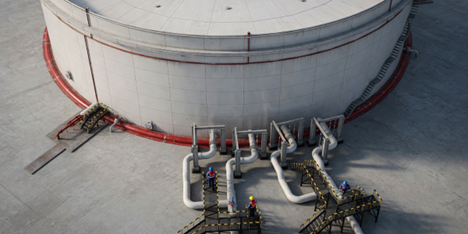
We see the dangers of storage tank environments every day. Too many times, operators rely on basic training to prevent accidents. However, a standard petroleum industry safety certification might only verify that someone passed a simple test. We believe that true safety requires a much deeper level of operational knowledge.
Our team works to eliminate workplace injuries and fatalities. The industry is changing, and standard methods are no longer enough. To protect lives, every modern safety certification for tank operations must prove that a supervisor can handle real emergencies. We focus on training professionals who can manage hazards under extreme pressure.
Why Is the Industry Moving Away from Traditional Multiple-Choice Tests?
The petrochemical sector faces a major transition. Recently, the American Petroleum Institute decided to sunset its legacy Tank Entry Supervisor program. This decision reflects a major trend in global industrial safety. Over the past decade, statistics show that standard multiple-choice exams have not stopped workplace accidents.
Many candidates memorize manuals just to pass a test. They forget the critical details once they enter the field. We know that real-world hazards do not come with multiple-choice options. A supervisor must make split-second decisions based on changing conditions. This shift in the industry means that companies now demand verifiable competency over simple attendance sheets.
How Can True Field Competency Be Verified?
We built this kind of method that proves our graduates really know their actual duties. The testing system looks at how well students hold onto key safety ideas over time. We record a baseline of what they know, and we actively point out dangerous misconceptions as they show up.
To get credentials through our program, it’s not enough to just collect a passing grade.
If a student misses a question, they then have to research the topic. After that, they must describe the correct answer to a qualification officer, and it has to be in a way that makes sense.
This repeats until they reach one hundred percent mastery. In the end, this strict way means every supervisor we qualify can handle high-risk projects without cutting corners.
What is the Difference between a Certificate and a true board qualification?
Many people confuse a simple certificate of attendance with a true qualification. A certificate only proves you sat in a room. A board qualification proves you can perform the work. We want to show this difference clearly.
Here is how a standard class compares to our rigorous qualification process:
| Training Component | Standard Certificate Class | Our Qualification Program |
| Primary Evaluation | Single exam with no follow-up | Continuous retainability tracking |
| Target Passing Score | Usually seventy percent | One hundred percent mastery required |
| Practical Application | Heavy focus on theory only | Hands-on field scenario practice |
| Board Oversight | None or automated scoring | Direct evaluation by the industry board |
What Critical Technical Protocols Do Our Supervisors Master?
We train students to run every stage of aboveground storage tank work with very precise control. We help them prepare safe work plans and also coordinate with emergency response teams. In our intense courses, candidates take in multiple important parts of tank maintenance, including the basics that are never “optional”:
- Proper tank isolation and double block-and-bleed systems.
- Safe degassing steps to remove volatile organic compounds.
- Structurally reliable tank cribbing for floating roofs.
- Correct threshold limit value calculations for toxic gases.
- Safe vacuum truck work, plus static electricity hazards.
With these competencies, our graduates are positioned to prevent serious failures before they even start.
How Does Our Approach Protect Your Operations?
We believe that safety is not just about compliance. It is about bringing every worker home safely at the end of their shift. By training over five hundred supervisors and rescue technicians globally, we have built a reputation for excellence. We understand that every terminal and refinery has unique hazards.
That is why we offer custom compliance plans and bring our training teams directly to your facility. This ensures your team receives instruction tailored to your specific working environment.
Final Thought:
Industrial safety standards are rising, and legacy programs are disappearing. Relying on a basic petroleum industry safety certification is no longer enough to protect your assets and workforce. To maintain a safe workplace, you need a modern safety certification for tank operations that guarantees complete field competency.
For decades, the professional training services provided by IQCIA have helped companies bridge the gap between simple compliance and true operational excellence.
We invite you to contact us today to enroll your team in our upcoming qualification courses and elevate your safety standards.
Frequently Asked Questions
- What is a tank entry supervisor?
A tank entry supervisor is basically the person who oversees the safety of folks going into aboveground storage tanks. They look at the likely hazards ahead of time, set up ventilation protocols, and make sure everything matches the federal safety rules. The role also includes preparing a really detailed safe work plan and coordinating any emergency rescue operations if something goes wrong, like during the project.
- Why are confined spaces in storage tanks so dangerous?
Storage tanks often contain toxic vapors, flammable gases, or oxygen-deficient atmospheres. These hazards can cause immediate suffocation or fatal explosions. Additionally, physical obstacles and restricted entry points make escaping from these spaces very difficult. Proper isolation and continuous atmospheric monitoring are essential to prevent serious workplace injuries.
- What is the purpose of a petroleum industry safety certification?
A petroleum industry safety certification validates a worker’s understanding of critical safety standards and operational hazards. It helps employers verify that personnel can manage high-risk tasks safely. These certifications ensure compliance with regulatory frameworks and reduce the likelihood of costly industrial accidents, leaks, or fatalities.
- How often should supervisors renew their safety certification for tank operations?
Most industrial standards require professionals to renew their safety certification for tank operations every three to five years. Regular renewals ensure that supervisors remain updated on the latest safety regulations, technological advancements, and rescue techniques. Continuous training helps maintain a high level of safety awareness in the field.
- What is the role of continuous atmospheric monitoring during tank cleaning?
Continuous atmospheric monitoring measures oxygen levels and detects toxic or flammable gases inside the tank. Chemical levels can change rapidly during cleaning operations due to sludge disturbance. Monitoring provides early warnings of hazardous conditions, allowing supervisors to evacuate workers immediately before toxic exposure or an explosion occurs.